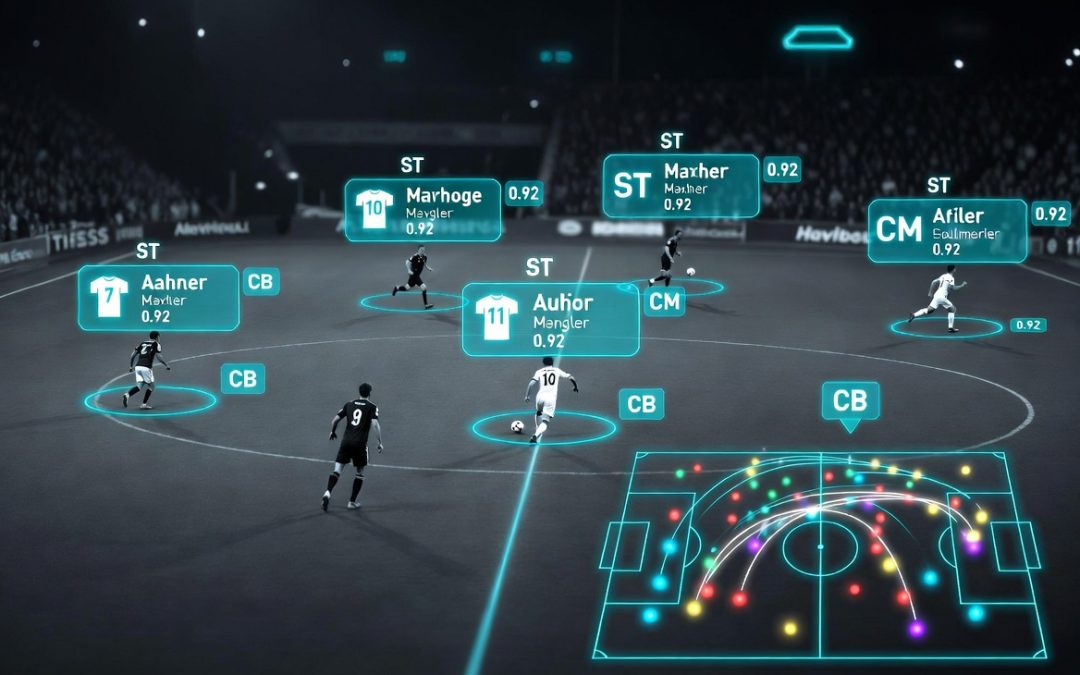
For decades, tactical analysis in football depended on a coach’s eye, a notebook and hours of video. Today, artificial intelligence is changing how clubs, analysts and coaches understand the game. Computer vision can follow every player on the pitch, machine learning can find patterns no human would spot in real time, and data science turns thousands of match events into clear, practical decisions.
In this article, we look at how AI is used in football tactical analysis today, what it can and cannot do, and how coaches at any level can start using it.
What AI tactical analysis actually means
AI tactical analysis is the use of algorithms to describe, evaluate and predict what happens on the pitch. It usually combines three layers:
- Data capture – tracking player and ball positions from video (computer vision) or from GPS and event data.
- Pattern detection – identifying structures such as passing triangles, pressing traps, defensive lines or overloads.
- Decision support – turning those patterns into recommendations a coach can use in training and on match day.
The goal is not to replace the coach. It is to give the coach better information, faster.
1. Player tracking with computer vision
Modern computer vision models can detect players, referees and the ball in broadcast or tactical camera footage, assign each player to a team and follow their movement frame by frame. From this tracking data, analysts can measure distances between lines, team compactness, pressing intensity and the space each player controls.
We explore this in our project on AI player recognition and tactical tracking.
2. Detecting tactical structures
Once positions are known, AI can recognise recurring structures. Passing triangles are a good example: they create safe passing options and help a team keep the ball under pressure. An algorithm can detect when triangles form, how stable they are and which players are involved, giving coaches objective feedback on positional play.
See our work on AI detection of tactical triangles and on visualising defensive and offensive spaces.
3. Simulating tactical scenarios
Beyond describing the past, AI can help coaches test ideas. Scenario simulation lets an analyst move players, change a formation or adjust a pressing trigger and see how spaces and passing options change. It is a safe way to explore a game plan before taking it to the training pitch.
Read more about AI tactical scenario simulation.
4. Load management and injury risk
Tactics only work if players are available. Machine learning models can combine training load, jump and sprint data and recovery information to flag players with a higher injury risk, so staff can adjust training in time. This is especially relevant for intense plyometric work.
Explore our projects on injury risk prediction and personalised plyometric training plans.
What AI cannot do (yet)
AI is a powerful assistant, but it has limits that every coach should know:
- It depends on data quality – poor video or incomplete tracking leads to poor conclusions.
- It does not understand context the way a coach does: the mood in the dressing room, a player’s personal situation, or the referee’s style.
- Models must be explained. A recommendation a coach cannot understand will not be trusted, and should not be.
The best results come when coaching experience and data work together.
How coaches can start using AI today
- Start with one question. For example: “Why do we lose the ball in the middle third?” Then collect only the data that answers it.
- Use video you already have. Many tracking and tagging tools now work with a single tactical camera.
- Measure what you train. Link tactical KPIs (compactness, passing options, pressing distance) to your training sessions.
- Build a structured process. Clear goals, short feedback loops and regular reviews make data useful. This is the idea behind our ScrumSoccer course for football coaches.
Go deeper: Modern Football Intelligence
A complete guide to how artificial intelligence, computer vision, data science and software engineering are reshaping football – with practical AI-supported methods for tactical analysis, player evaluation, decision support and performance optimisation.