
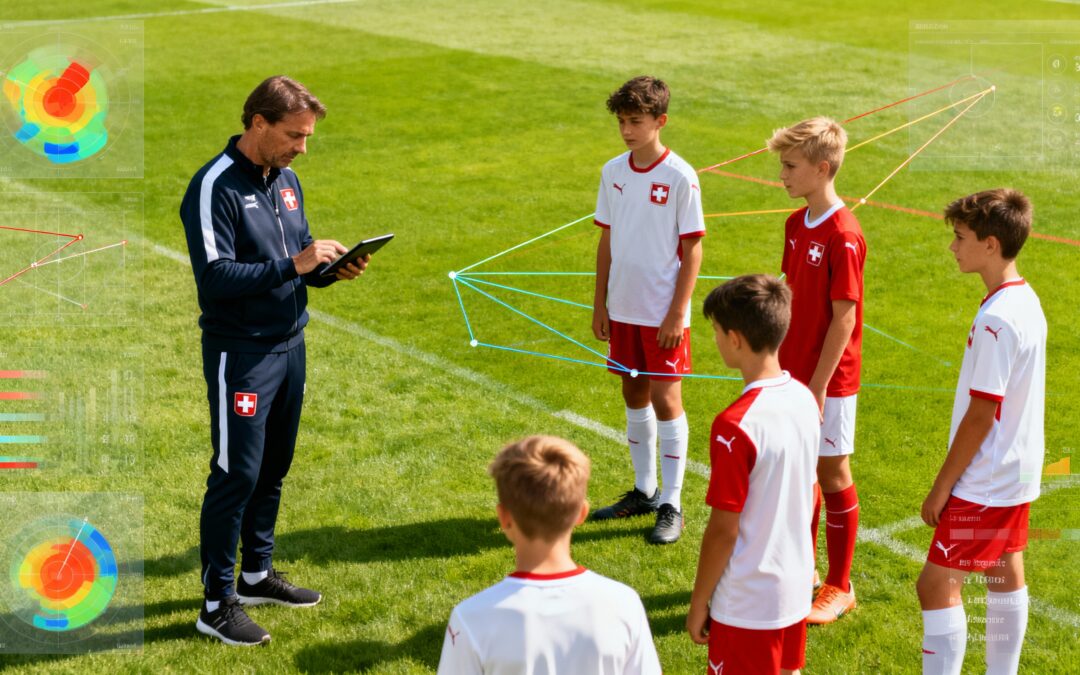
“Data-driven coaching” can sound like something reserved for professional clubs with analysts and expensive software. In reality, any coach can work with data – from a youth team to a semi-professional squad. The key is not the amount of data, but asking the right questions and building a simple routine. This beginner’s guide shows you how to start.
What data-driven coaching really means
Data-driven coaching means using objective information to support the decisions you already make: how you plan training, how you prepare for matches and how you give feedback to players. Data does not replace your experience or your eye for the game. It helps you check your impressions, notice patterns you might miss and explain your decisions more clearly to players.
Step 1: Start with questions, not numbers
The most common mistake is collecting everything and analysing nothing. Start with two or three questions that matter for your team right now, for example:
- Why do we concede so many chances after losing the ball?
- Are we creating enough chances from wide areas?
- Are players recovering well enough between intense sessions?
Each question tells you exactly which data you need – and which you can ignore.
Step 2: Choose simple, meaningful KPIs
A key performance indicator (KPI) is a measurable value linked to your question. Good KPIs for beginners are easy to collect and easy to explain:
- Ball recoveries within 5–8 seconds after losing possession
- Shots and chances created per match, and from which zones
- Entries into the final third and how many end in a shot
- Training load, for example session duration × perceived exertion (RPE)
- Availability: how many players can train fully each week
Step 3: Collect data consistently
You do not need expensive tools to begin:
- Video: a phone or camera on a tripod, recorded from an elevated position.
- Tagging: note key events (recoveries, shots, entries) with timestamps, by hand or with a free tagging app.
- A spreadsheet: one row per match or session, one column per KPI.
- Player feedback: a short wellness and RPE questionnaire after training.
Consistency matters more than precision. The same method every week gives you trends you can trust.
Step 4: Turn data into decisions
Data is only useful if it changes something. After each match or week, ask: what does this tell us, and what will we do differently in training? If your team rarely recovers the ball quickly, design rondos and transition games that reward immediate counter-pressing – then check whether the KPI improves over the next matches.
Step 5: Build a feedback loop
The most effective coaches work in short, repeating cycles: set a goal, train it, measure it, review it with the team and adjust. This is exactly the idea behind agile methods like Scrum, which we apply to football in the ScrumSoccer course for coaches. Short cycles keep the team focused and make progress visible.
Common mistakes to avoid
- Tracking too many KPIs at once
- Showing players spreadsheets instead of clear clips and visuals
- Judging a player or tactic on a single match
- Ignoring context: opponent strength, weather, pitch and fatigue
- Forgetting that the goal is better football, not better statistics
Where AI fits in
Once the basics are in place, artificial intelligence can automate much of the work – from tracking players with computer vision to AI-supported tactical analysis and injury risk prediction. But the foundation is always the same: clear questions, consistent data and a coach who turns insights into training.
Coach with structure: the ScrumSoccer course
A one-day course for coaches by Anas Skiti: apply Scrum and the OJAA principle to plan, track and manage your team – in English, German or French.